

The Arkansas Studies Institute, Little Rock, Ark., has earned national recognition in the 2010 Innovative Design in Engineering and Architecture with Structural Steel awards program (IDEAS2), and members of the project team will be presented with awards from the American Institute of Steel Construction (AISC) during a public ceremony at the museum at 10 a.m. on Wednesday, July 21. Conducted annually by AISC, the IDEAS2 awards recognize outstanding achievements in engineering and architecture on structural steel projects around the country. The Arkansas Studies Institute is a recipient of a National Award in the category of projects $15 Million to $75 Million, making it one of only seven projects around the country to receive the National honor. Located in a thriving entertainment district near the Clinton Presidential Library, the design combines significant but neglected buildings from the 1880s (heavy timber) and 1910s (concrete) with a new technologically expressive steel archive addition, creating a pedestrian focused, iconic gateway to the public library campus and the face of Arkansas history. Public spaces – galleries, a café, and a museum – enliven streetscape storefronts, while a great research hall encompasses the entire second floor of the 1914 building. “The exposed steel in this building is a great example of how structural steel can be used as an aesthetic feature,” commented Brad Lange, pre-construction manager, The Weitz Company, Des Moines, Iowa, and a judge in the competition. Because the existing structures could not support the weight capacity needed for the archive collection, a new addition on the 50-ft-wide lot previously used for parking was planned to house three full floors of compact shelving above an open, glass-wrapped “soft story” gallery at street level. Steel was the obvious choice because it provided the required free spans and offered architecturally expressive truss options for the interior gallery. The juxtaposition of heavy document storage above light, open galleries creates an instantly identifiable image for the Arkansas Studies Institute. In formulating the structural concept, designers studied how the existing buildings’ structures were left exposed, expressing the construction methods of the different centuries in which each was built. The beauty of these structures is in the simple elegance of constructing just what is needed, meaning that all structural systems for this building should be celebrated as part of telling an honest story – the story of the state’s construction history. The goal was to minimize applied ornamentation normally found in a library building, and instead to show the functional detailing of the steel in a beautiful way. Between buildings, a thin atrium pulls the new steel structure away to protect the old, stretching the building’s length and flooding all levels with light – a key sustainable strategy. Suspended bridges span the gap between new and old, connecting architectural centuries. This four-story atrium acts as a vertical gallery to tell the state’s story. Steel-framed handrails mimic filmstrips through the height of the space, providing locations for 100 historic images from archives in glass panels. Photos of the Arkansas Studies Institute are available upon request. Please contact Tasha O’Berski at 312.670.5439 or oberski@aisc.org.
Arkansas Studies Institute Wins National Architecture and Engineering Award
This Month’s Features
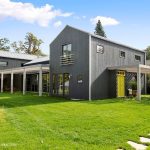
Education, advocacy, and metal building excellence
Metal building systems extend far beyond the basic, box-like structures that many architects may still associate with them. Today, they support complex designs, varied...
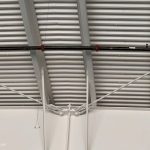
Bracing for the future
In metal building design, owners want to know the cost and delivery. Architects think about openings, elevations, space planning, and how the building will...

Champions Run
Recognizing the growing popularity of pickleball, Champions Run Golf Course in Omaha, Neb., developed a new year-round facility designed to provide an inviting environment...

From basic shelter to building blocks with infinite possibilities
When 13 metal building system manufacturers came together 70 years ago as the founding members of the Metal Building Manufacturers Association (MBMA), they did...
Read the latest issue
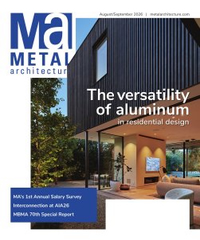
September 2026