

The 2009 “It’s About Saving Energy” Building Awards contest from the Olathe, Kan.-based Reflective Insulation Manufacturers Association International has produced winners in two categories, Metal and Residential Building. In the Metal Building category, the winner is Prodex in San Jose, Costa Rica. This project was done for the Sugar Cane Industry League Costa Rica. The customer required its 5-acre (2-hectare) sugar storage facility to have a minimum humidity and temperature level. Sugar can turn brown when exposed to temperatures higher than 86 F (30 C) and can coagulate with high humidity levels. The ambient temperature at the spot is extreme and can easily get upto 100 F (38 C) and humidity levels of 90 percent can occur. Prodex sales people and engineers made an excellent analysis of the client’s needs, the material characteristics of AD10 were used to its maximu, —thermal resistance, vapor barrier and firmness—and the thorough evaluation of the project showed that even in a gigantic storage facility, the Prodex product AD10 managed to tame an extreme outdoor climate to a satisfying internal climate and it avoided the use of energy to control the environment. In the Residential Building category, the winner is Reflectix Inc., Markleville, Ind. This residence was built outside the city of Anderson,Ind. The design goal of the home’s insulation assemblies was to utilize reflective insulation and radiant barrier to dramatically enhance the structure’ energy efficiency resulting in a higher level of interior comfort at reduced costs for heating and air conditioning.Five locations within the home’s structure would include either reflective insulation or radiant barriers. They are: • Cathedral ceiling—radiant barrier installed above the rafters, below the decking. • Cathedral ceiling—reflective insulation installed in the rafter cavity below the fiberglass and above the sheetrock. • Attic—radiant barrier installed above the rafters and below the roof decking. • Wall/exterior—reflective insulation installed inside the stud cavity between the fiberglass and the sheetrock. • Wall/exterior on the OSB structural panels—radiant barrier installed directly to the OSB structural panels prior to the laying of the trick exterior. This design displays how reflective products in conjunction with code building design can dramatically enhance the insulating performance of the structure as a whole.
“It’s About Saving Energy” award winners announced
This Month’s Features
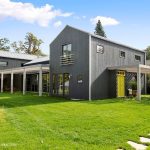
Education, advocacy, and metal building excellence
Metal building systems extend far beyond the basic, box-like structures that many architects may still associate with them. Today, they support complex designs, varied...
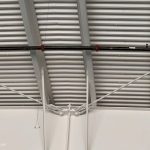
Bracing for the future
In metal building design, owners want to know the cost and delivery. Architects think about openings, elevations, space planning, and how the building will...
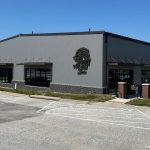
Champions Run
Recognizing the growing popularity of pickleball, Champions Run Golf Course in Omaha, Neb., developed a new year-round facility designed to provide an inviting environment...

From basic shelter to building blocks with infinite possibilities
When 13 metal building system manufacturers came together 70 years ago as the founding members of the Metal Building Manufacturers Association (MBMA), they did...
Read the latest issue
September 2026