

AAMA 505-09, a test procedure, and QAG-1-09, a quality assurance processing and monitoring guide, have been released by the American Architectural Manufacturers Association, Schaumburg, Ill. AAMA 505-09, “Dry Shrinkage and Composite Performance Thermal Cycling Test Procedure” outlines a laboratory method to measure the amount of dry shrinkage and retained composite longitudinal shear resistance of extrusions incorporating a thermal barrier after thermal cycling. The process of thermal cycling described in AAMA 505-09 is referred to as the “differential” method and is to be used for product qualification of all types of thermal barriers. AAMA QAG-1-09, “Quality Assurance Processing & Monitoring Guide for Poured and Debridged Polyurethane Thermal Barriers” is a quality assurance checklist for the in-plant processing of poured and debridged thermal barriers. AAMA QAG-1-09 includes information related to equipment checks, chemical storage and handling, process control, debridging and fabrication. Both documents were developed by the AAMA Composite Thermal Barrier Testing Procedures Task Group, co-chaired by Patrick Muessig from Azon USA Inc., Kalamazoo, Mich., and George Nash from Ensinger Inc., Washington, Pa. “The improvement of the thermal performance of fenestration systems has become increasingly important in recent years,” Muessig said. “These two documents describe the thermal test cycling methods known as the ‘soak’ test used for continuous quality checks and the ‘differential’ method used for product qualification.” AAMA 505-09 and AAMA QAG-1-09 are available to members at a cost per document of $10 for download, $20 for paper copy and $25 for CD. Non-members may purchase the documents at a cost of $25 for download, $50 for paper copy and $55 for CD. To order AAMA 505-09 and AAMA QAG-1-09, visit the AAMA Online Publication store at www.aamanetstore.org. More information about AAMA and its activities can be found at www.aamanet.org.
AAMA releases test procedure and quality assurance guide for thermal barriers
This Month’s Features
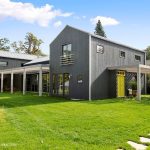
Education, advocacy, and metal building excellence
Metal building systems extend far beyond the basic, box-like structures that many architects may still associate with them. Today, they support complex designs, varied...
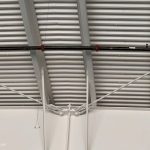
Bracing for the future
In metal building design, owners want to know the cost and delivery. Architects think about openings, elevations, space planning, and how the building will...

Champions Run
Recognizing the growing popularity of pickleball, Champions Run Golf Course in Omaha, Neb., developed a new year-round facility designed to provide an inviting environment...

From basic shelter to building blocks with infinite possibilities
When 13 metal building system manufacturers came together 70 years ago as the founding members of the Metal Building Manufacturers Association (MBMA), they did...
Read the latest issue
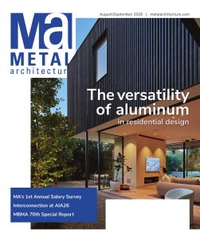
September 2026