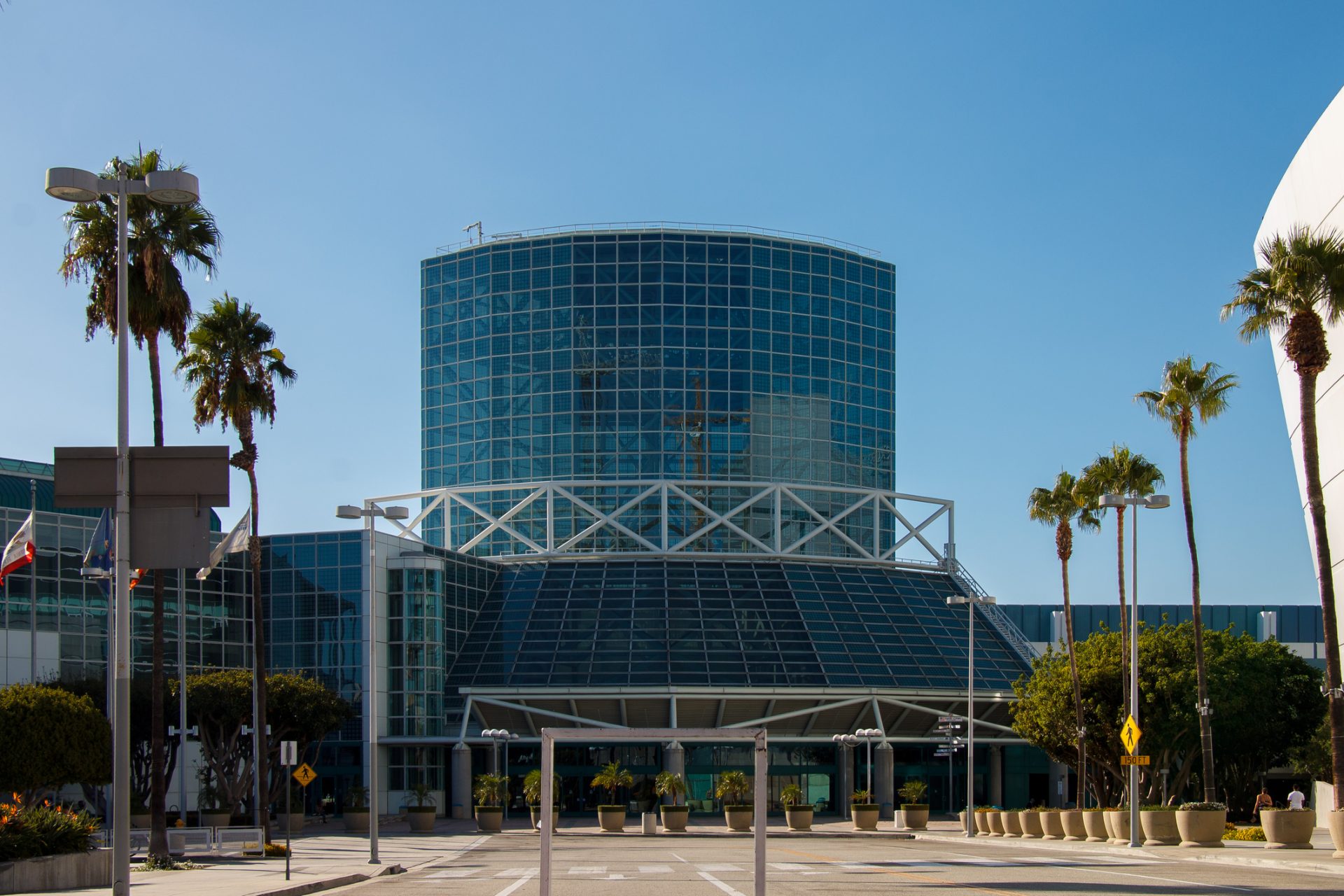
Photo © Alexandre Fagundes De Fagundes | Dreamstime.com
Greenbuild International Conference and Expo 2025, held in Los Angeles in early November, delivered a rich convergence of familiar themes, sustainable design, high-performance operations, and community-scale planning, alongside a pronounced push into emerging territories: circularity and embodied-carbon frameworks, digital twins and artificial intelligence (AI), and, most notably for the industry, the embedding of resilience across pre-design, construction, and operations.
The recent event marked a pivotal moment: the debut of the newly released LEED version 5 (v5) rating system, a comprehensive overhaul that integrates climate-risk assessment, embodied-carbon accounting, and social equity directly into the certification framework.
LEED v5, circularity, carbon, and intelligent systems
The conference sessions and exhibition hall reflected a mature, systems-based understanding of sustainability. LEED v5 introduces new credits that require teams to assess a project’s vulnerability to hazards such as extreme heat, flooding, and wildfire. A resilience assessment performed in the pre-design phase helps teams not only identify hazards but also consider and prioritize resilient design and operations strategies. The Resilient Design Summit, a full-day pre-conference session, emphasized this expanded practice with an overview of the assessment process, followed by panel presentations on designing for specific hazards, including wildfire, extreme heat, and flooding. Overall, the summit highlighted the benefits of resilient design, highlighting occupant safety and well-being, continuity of operations, and preservation of asset values.
Circularity and embodied carbon were also recurring themes. Across various sessions, speakers emphasized that the climate impact of a building begins before occupancy, extending to the extraction, manufacturing, and transportation of materials used in its construction. Increasingly, project teams are asked to demonstrate not only performance in operation but also in reuse and
end-of-life recoverability.
Technology rounded out the picture. A pre-conference summit and several sessions explored how AI and digital twins are transforming the design process, providing predictive analytics for energy, carbon, and resilience. Presenters showcased AI-driven design platforms that integrate live climate modeling, hazard data, and material databases, enabling architects and engineers to quickly test multiple scenarios and make more resilient, low-carbon decisions. They also discussed digital twin applications to optimize asset management and building operations.
Resilience moves to the center
Resilience was a major thread that ran through Greenbuild 2025. From the Resilient Design Summit that opened the week to the inspiring closing keynote conversation, “The Intersection of Climate, Equity, and Community Empowerment,” nearly every discussion acknowledged that sustainability without resilience is incomplete.
Sessions such as “Resilience in Design: Integrating Future Climate Data into Practice” emphasized that designing for historic weather no longer suffices. Modeling future heat, rainfall, and wind conditions using downscaled climate data must become a standard practice.
For architects, this evolution represents a new standard of care: understanding climate risk and communicating this to clients is now a professional obligation. For owners, it is an essential component of asset risk management and insurance strategy. One session, “The Resilience Dividend: Unlocking Insurance–Real Estate Synergies,” explored how resilience planning can reduce premiums and increase property value by lowering risk exposure.
Designing for thermal safety as heat risks rise
Of all climate risks, extreme heat drew particular attention. In sessions such as “Don’t Sweat It: Designing for Extreme Heat and Resilience” and “From Wildfires to Floods: Integrating LEED v5 Climate-Risk Assessment into Design,” experts warned that prolonged heat waves, combined with grid instability, pose the most immediate threat to occupant health and continuity of operations.
The concept of thermal resilience, also referred to as thermal safety, was highlighted as a critical new design performance metric. The goal is not only comfort but survivability, maintaining safe indoor temperatures when power and cooling fail. Presenters shared modeling of the combined benefits of passive strategies (high-performance envelopes, shading, reflective materials, cross-ventilation) as well as mechanical redundancy, such as battery-backed ventilation fans to maintain safe indoor conditions. This aligns with LEED v5’s new “Resilient Spaces” credit that includes a thermal safety option, encouraging designers to designate and design interior areas that maintain habitable temperatures during extended power outages or heat emergencies.
One important takeaway: thermal resilience must be designed, not assumed. A building may meet the code-required thermal performance yet still reach unsafe indoor temperatures during a multi-day heatwave.
This emphasis on heat safety also reinforces the growing intersection between sustainability and public health, linking energy efficiency, occupant well-being, and climate adaptation in a single performance narrative.
Schools and community anchors as resilience hubs
A second powerful thread running through the conference was the connection between resilience and equity, most visibly illustrated in sessions such as “Resilient Community Anchors: A Home, A Church, A Bank, A School” and “Designing for Resilience and Equity: Climate-Ready Schools in Practice.”
Speakers described how everyday institutions, especially schools, can serve as “resilience hubs” during and after disasters. When designed with robust envelopes, redundant systems, and community-accessible layouts, schools can provide safe refuge during extreme heat, smoke events, storms, and power outages. They also function as trusted community centers for communication, relief distribution, and emotional recovery.
In the Los Angeles Unified School District’s Climate-Ready Schools initiative, new and renovated campuses incorporate high-albedo roofs, shaded outdoor learning spaces, micro-grids, and enhanced air filtration.
Faith institutions, as well as businesses such as restaurants and banks, were similarly cited as potential resilience anchors, especially in under-resourced communities. The common denominator: community cohesion, familiarity, and trust are as important as resilient infrastructure to create resilience. These presentations were a perfect example of why the new Human Impact Assessment prerequisite was added to LEED v5.
A converging agenda for architects and builders
For the architecture and construction community, the message from Greenbuild 2025 was unambiguous:
- Integrate climate-risk assessment early. Factor future heat, storm, and fire data into concept design.
- Pursue circularity and low-carbon materials. Track embodied carbon and design for deconstruction and reuse.
- Adopt AI and digital twins. Use data to predict and optimize performance, maintenance, and resilience outcomes.
- Prioritize occupant safety. Design for passive survivability and indoor environmental quality during disruptions.
- Think at the community scale. View projects as part of resilience networks, not isolated assets.
Closing reflection
As architecture, engineering, and design professionals move into 2026, it is critical to recognize that sustainability, equity, and resilience have merged. Designing for carbon emissions reduction, circularity, and community are now inseparable goals. This message is reinforced by the memory of the devastating Southern California urban conflagration earlier in 2025, with communities still grappling with the loss and working on recovery.
With these insights, every project can contribute to a safer and more adaptable built environment.
Alan Scott, FAIA, LEED Fellow, LEED AP BD+C, O+M, WELL AP, CEM, is an architect and consultant with more than 36 years of experience in sustainable building design. He is the director of sustainability with Intertek Building Science Solutions in Portland, Ore. To learn more, follow him on LinkedIn at www.linkedin.com/in/alanscottfaia/.
This column originally appeared in the January 2026 edition of Metal Architecture, which you can find in our Digital Edition Archives.